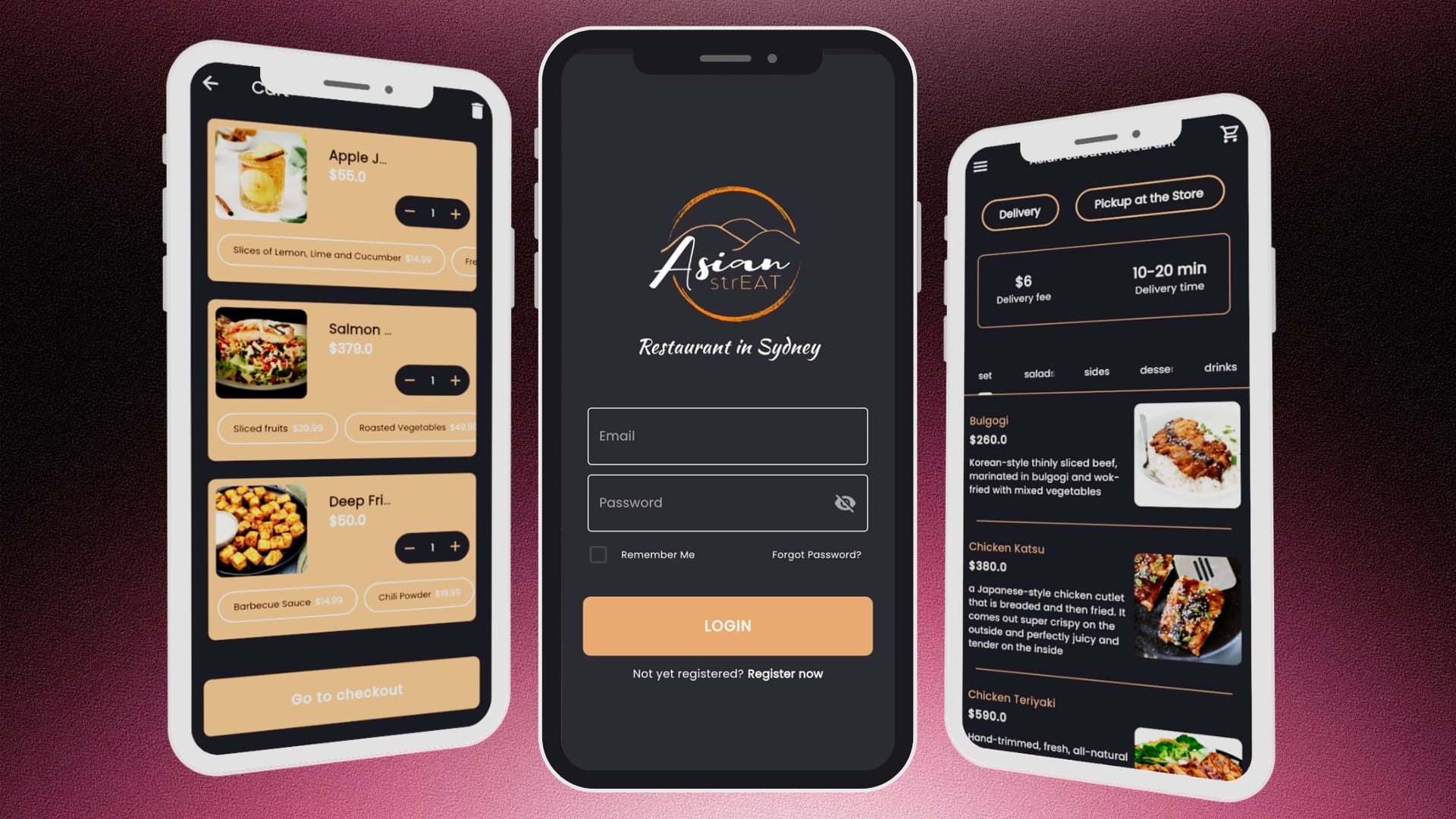
Quick Links Video Demo Problem Statement Project Objectives Key Features Development Methodology Technology Stack Categories Mobile DevelopmentTech Projects Tags Android StudioDartFirebaseFlutterFood OrderingMobile DevelopmentRestaurant AppUI/UX Design Project Title: Development of a Restaurant Mobile Application Project Type: Academic Project – Mobile Application Role: Project Manager • UI/UX Designer • Mobile Developer Tools Used: Flutter, Dart, Firebase, Android Studio, Figma Executive Summary The Restaurant Mobile Application is an academic mobile development project designed to address common challenges faced by restaurants in managing customer orders, improving service efficiency, and enhancing customer engagement. The application provides customers with a seamless digital ordering experience while enabling restaurants to streamline order processing and promote their products through an intuitive mobile platform. Developed using Flutter, the application delivers a modern cross-platform experience for Android and iOS devices. It incorporates essential restaurant features including digital menu browsing, food ordering, delivery and pickup options, secure user authentication, shopping cart management, payment processing, order receipts, loyalty membership, promotional offers, favorites, and customer support. The project demonstrates how mobile technologies can improve customer convenience while supporting digital transformation in the food service industry. Background The rapid adoption of mobile technology has significantly changed customer expectations within the restaurant industry. Modern consumers expect convenient digital services that allow them to browse menus, customize orders, complete secure transactions, and receive timely updates without relying on traditional ordering methods. Many restaurants, particularly small and medium-sized businesses, continue to depend on manual ordering processes or limited online platforms that may result in longer waiting times, order inaccuracies, and reduced customer engagement. These operational challenges highlight the need for an integrated mobile application capable of providing customers with a fast, reliable, and user-friendly dining experience. Problem Statement Traditional restaurant ordering processes present several operational challenges, including: Manual order taking that increases the risk of errors. Long waiting times during peak operating hours. Limited customer engagement outside the restaurant. Difficulty showcasing menu items and promotions. Lack of a centralized digital ordering platform. Inconvenient ordering and payment processes. Limited customer loyalty and retention strategies. These challenges affect both customer satisfaction and overall operational efficiency. Project Objectives The primary objective of the project was to develop a mobile application that enhances the restaurant ordering experience through digital technology. Specifically, the application aims to: Digitize restaurant ordering processes. Provide customers with an interactive digital menu. Support both delivery and pickup services. Simplify cart management and payment processing. Improve customer engagement through promotions and loyalty features. Provide secure account management and authentication. Deliver an intuitive and responsive mobile user experience. Proposed Solution The Restaurant Mobile Application provides a centralized platform where customers can conveniently browse menu categories, customize food selections, place orders, complete payments, and track their purchases from a mobile device. The system combines restaurant ordering, customer account management, promotional features, and digital payment functionality into a single application, improving both customer convenience and restaurant service efficiency. Key Features User Authentication User Registration Secure Login Remember Me Password Recovery Profile Management Digital Menu Customers can browse categorized menu items including meal sets, salads, side dishes, desserts, and beverages.Each product includes images, descriptions, pricing, and available add-ons. Food Ordering The application enables customers to: View product details Customize orders with add-ons Add items to cart Update quantities Remove products Proceed to checkout Delivery and Pickup Customers can choose between delivery and store pickup. The application allows users to schedule preferred dates and times while entering the required delivery or pickup information. Payment Processing The application includes a payment interface where customers can securely enter payment details before confirming purchases. Shopping Cart The shopping cart provides: Real-time item count Quantity management Cart summary Checkout functionality Cart clearing option Digital Receipt Upon successful payment, customers receive an electronic receipt containing: Ordered products Quantity Pricing Order summary Loyalty Program The application includes a membership feature that provides customers with information regarding premium membership benefits and future reward opportunities. Promotions and Vouchers Customers can browse promotional offers, discount vouchers, and limited-time deals. Favorites Users can save preferred menu items for faster ordering during future visits. Help and Information Additional customer support includes: Help Center Frequently Asked Questions Terms and Conditions Privacy Policy Video Demo https://vimeo.com/1206460564?share=copy&fl=sv&fe=ci Style Guide Development Methodology The project adopted the Software Development Life Cycle (SDLC) integrated with the Agile methodology to support structured and iterative development. This iterative approach enabled continuous improvements based on user feedback while ensuring the application met functional and usability requirements. Technology Stack Frontend Flutter Dart Backend Firebase Authentication Cloud Firestore Firebase Storage Development Tools Android Studio Figma Expected Outcomes The Restaurant Mobile Application is expected to: Improve customer convenience. Reduce ordering errors. Shorten ordering time. Enhance customer engagement. Increase accessibility to restaurant services. Support customer retention through loyalty features. Provide a modern digital dining experience. Conclusion The Restaurant Mobile Application successfully demonstrates the application of modern mobile development technologies in addressing common challenges within the food service industry. By integrating digital ordering, secure authentication, delivery and pickup services, payment processing, loyalty features, and customer engagement tools into a single platform, the project provides a comprehensive solution for enhancing both customer experience and restaurant operations. Throughout the project, valuable practical experience was gained in mobile application development using Flutter, cloud-based backend integration with Firebase, UI/UX design, system architecture, and Agile software development. The project also strengthened technical skills in cross-platform development, database integration, authentication, state management, and software testing, while enhancing problem-solving, collaboration, and project management abilities. Overall, the project bridged academic learning with real-world software development practices, providing industry-relevant experience and demonstrating the ability to design and develop scalable, user-centered mobile applications for the restaurant industry.
Employee Management App
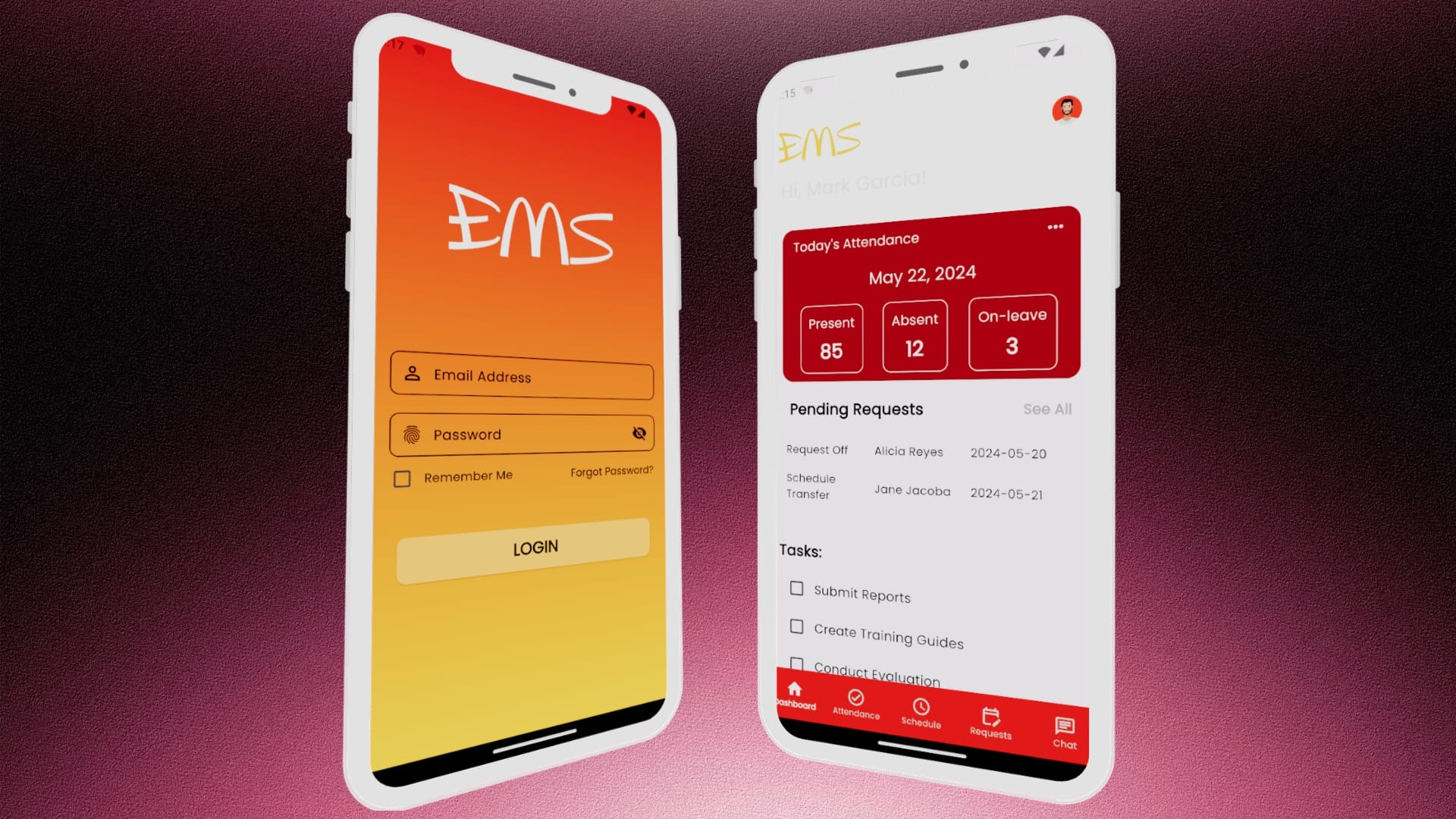
Quick Links Video Demo Problem Statement Project Objectives Key Features Research Approach Technology Stack Categories Mobile DevelopmentTech Projects Tags Android StudioCloud DatabaseDartEmployee ManagementFirebaseFlutterMobile AppMobile Development Project Title: Employee Management System (EMS) Project Type: Capstone Project – Mobile Application Role: Project Manager • Business & System Analyst • UI/UX Designer • System Developer Tools Used: Flutter, Dart, Firebase, Android Studio, Figma Executive Summary The Employee Management System (EMS) is a capstone project developed to address common workforce management challenges experienced by organizations that rely on shift-based operations. The application was designed as a mobile solution that centralizes employee information, automates scheduling, streamlines attendance monitoring, digitizes leave management, and improves communication between management and employees. Developed using Flutter and Firebase, the system provides a secure and scalable platform that enables organizations to manage daily workforce operations efficiently while reducing dependence on manual processes. By integrating multiple human resource functions into a single mobile application, the project demonstrates how modern mobile technologies can improve operational efficiency, data accessibility, and employee engagement. Background Many organizations still rely on spreadsheets, paper-based records, messaging platforms, and disconnected systems to manage employee-related processes. While these methods may be sufficient for smaller teams, they often become inefficient as organizations grow, leading to challenges such as time-consuming schedule creation, attendance tracking errors, delayed leave approvals, scattered employee information, poor communication, difficulty generating reports, and increased administrative workload. These issues emphasize the need for a centralized mobile solution that streamlines workforce management, improves operational efficiency, and provides secure, real-time access to employee data. Problem Statement The study identified several operational problems commonly encountered in employee management: Manual scheduling consumes significant administrative time. Employee attendance is difficult to monitor accurately. Leave requests require multiple communication channels. Employee records are stored across different files and platforms. Internal announcements are often missed due to decentralized communication. Performance evaluation records are difficult to organize and retrieve. Employees have limited access to important employment information such as schedules and payslips. These issues reduce operational efficiency and increase the possibility of human error. Project Objectives The primary objective of the project was to design and develop a mobile-based Employee Management System capable of streamlining workforce management processes through automation and centralized information management. Specifically, the system aims to: Centralize employee information into a single database. Automate employee scheduling and attendance monitoring. Digitize leave request and approval processes. Provide secure access to employee payslips. Facilitate employee performance evaluations. Improve internal communication between employees and management. Implement role-based authentication for secure system access. Enhance productivity by minimizing manual administrative tasks. Proposed Solution The Employee Management System is a mobile application that integrates multiple human resource functions into a unified platform. The application provides different levels of access based on user roles, ensuring that employees, supervisors, and administrators can perform only the functions relevant to their responsibilities. The system replaces fragmented manual workflows with a centralized digital platform, enabling real-time access to workforce information and improving collaboration across the organization. Key Features Employee Information Management Maintains a centralized repository of employee records, including personal information, department assignments, employment status, and contact details. Schedule Management Allows managers to create, assign, and modify work schedules while enabling employees to view assigned shifts through the mobile application. Attendance Monitoring Digitally records employee attendance and provides managers with real-time attendance reports. Leave Management Employees can submit leave requests electronically, while managers can review, approve, or reject requests within the application. Digital Payslip Access Provides employees with secure access to electronic copies of their payslips for viewing and downloading. Performance Evaluation Supports digital employee performance assessments using standardized evaluation forms. Employee Onboarding Provides newly hired employees with training materials and onboarding resources accessible through the mobile application. Internal Communication Includes an integrated messaging feature that enables announcements and communication between employees and management. Reports and Analytics Generates operational reports that support workforce monitoring and management decision-making. Video Demo https://youtu.be/pqK7HlkrgBo Research Approach This project adopts a developmental research approach using the Software Development Life Cycle (SDLC) framework to systematically design, develop, test, and implement the Employee Management System. The SDLC provides a structured process consisting of the following phases: Ideation – Identifying workforce management challenges and defining the project’s objectives. Requirements Gathering – Collecting and analyzing functional and non-functional requirements through stakeholder consultation. Design – Developing the system architecture, database structure, and user interface prototypes. Development – Building the mobile application and integrating the required functionalities. Testing – Conducting functional and usability testing to identify defects and ensure system reliability. Deployment – Preparing and implementing the system for operational use. Maintenance – Providing continuous updates, improvements, and technical support to ensure long-term system performance. To complement the structured phases of the SDLC, the project integrates the Agile methodology to promote flexibility, iterative development, and continuous stakeholder collaboration. Development is carried out through four iterative milestones: Define – Establishing project scope, objectives, and system requirements. Design – Creating user-centered interface designs and system architecture. Develop – Implementing system features through incremental coding and continuous testing. Demo – Presenting each iteration to stakeholders for evaluation, feedback, and refinement. The integration of Agile within the SDLC enables continuous improvement throughout the development process, ensuring that the system remains aligned with user requirements, organizational objectives, and quality standards while allowing timely adaptation to changing needs. Technology Stack Frontend Flutter Framework Dart Programming Language Backend Firebase Authentication Cloud Firestore Firebase Storage Development Tools Android Studio Figma User Roles Administrator Responsible for overall system administration, employee management, report generation, and user access management. Manager Responsible for scheduling, attendance monitoring, employee evaluations, and request approvals. Employee Can access schedules, attendance records, payslips, leave requests, onboarding materials, and communication tools. Expected Outcomes The Employee Management System is expected to provide the following benefits: Reduced administrative workload Faster schedule preparation Improved attendance monitoring Centralized employee information Digital document management Improved communication Enhanced employee accessibility Increased operational efficiency Reduced paperwork Improved workforce transparency Conclusion The development of the Employee Management System (EMS) successfully demonstrated the application of software engineering principles in creating