Quick Links
Categories
- AutomationTech Projects
Tags
- Appointment AutomationBusiness Process AutomationCRM AutomationCustomer Journey MappingEmail & SMS AutomationGoHighLevel (GHL)Lead NurturingMarketing AutomationPatient RetentionWorkflow Automation
Overview
Project Title:
Automation System for Haneul Dental Care
Project Type:
Mock Project
Tools Used:
Miro • GoHighLevel
Role:
Marketing Automation Specialist
Responsibilities:
- Designed and implemented end-to-end marketing automation workflows to streamline lead management and customer journeys.
- Built automated email and SMS campaigns for lead nurturing, follow-ups, re-engagement, and customer retention.
- Configured CRM pipelines, lead scoring, segmentation, tags, and custom fields for personalized marketing.
- Automated appointment scheduling, confirmations, reminders, and follow-up communications.
The Haneul Dental Care Automation System is a marketing automation solution built using GoHighLevel (GHL). The project was designed to streamline patient communication, reduce administrative workload and increase patient retention through automated workflows that support the entire patient lifecycle.
The system centralizes patient management by automating every major touchpoint—from the initial consultation booking to long-term recall reminders and online reputation management. By replacing repetitive manual tasks with automation, the clinic can provide a more consistent patient experience while allowing staff to focus on delivering quality dental care.
Objectives
The project aimed to:
- Automate the complete patient journey from consultation booking to long-term retention.
- Reduce appointment no-shows through timely email and SMS reminders.
- Recover missed consultations and treatment appointments using automated follow-up sequences.
- Increase treatment acceptance through personalized upsell campaigns.
- Improve patient retention with scheduled recall reminders.
- Enhance the clinic’s online reputation by automating review requests.
- Reduce administrative tasks through automated patient tracking and pipeline management.
- Provide a centralized CRM system for monitoring patient progress throughout every stage of care.
The Problem
Many small to medium-sized dental clinics still rely on manual processes to manage patient communication, appointment follow-ups, and retention efforts. As the number of patients grows, these repetitive administrative tasks consume valuable staff time, increase the likelihood of human error, and make it difficult to deliver a consistent patient experience.
Without an automated communication system, clinics often encounter several operational challenges:
- Patients may forget their appointments, leading to increased no-show rates and lost revenue.
- Front desk staff spend significant time sending appointment confirmations, reminders, and follow-up messages manually.
- Missed consultations and treatment appointments are not consistently followed up, resulting in lost opportunities to recover potential patients.
- Treatment recommendations and upsell opportunities depend heavily on manual outreach, reducing treatment acceptance rates.
- Routine recall reminders are often overlooked, making it difficult to maintain long-term patient relationships and encourage preventive care.
- Requests for online reviews are inconsistent, limiting the clinic’s ability to strengthen its digital reputation.
- Patient information is scattered across different communication channels, making it challenging to track each patient’s progress throughout their journey.
To address these challenges, this mock project demonstrates how an integrated marketing automation system built with GoHighLevel (GHL) can centralize patient management, automate repetitive communication, and support the complete patient lifecycle—from the initial consultation to long-term retention and re-engagement.
System Features
The Haneul Dental Care Automation System includes the following core workflows:
Patient Consultation Booking
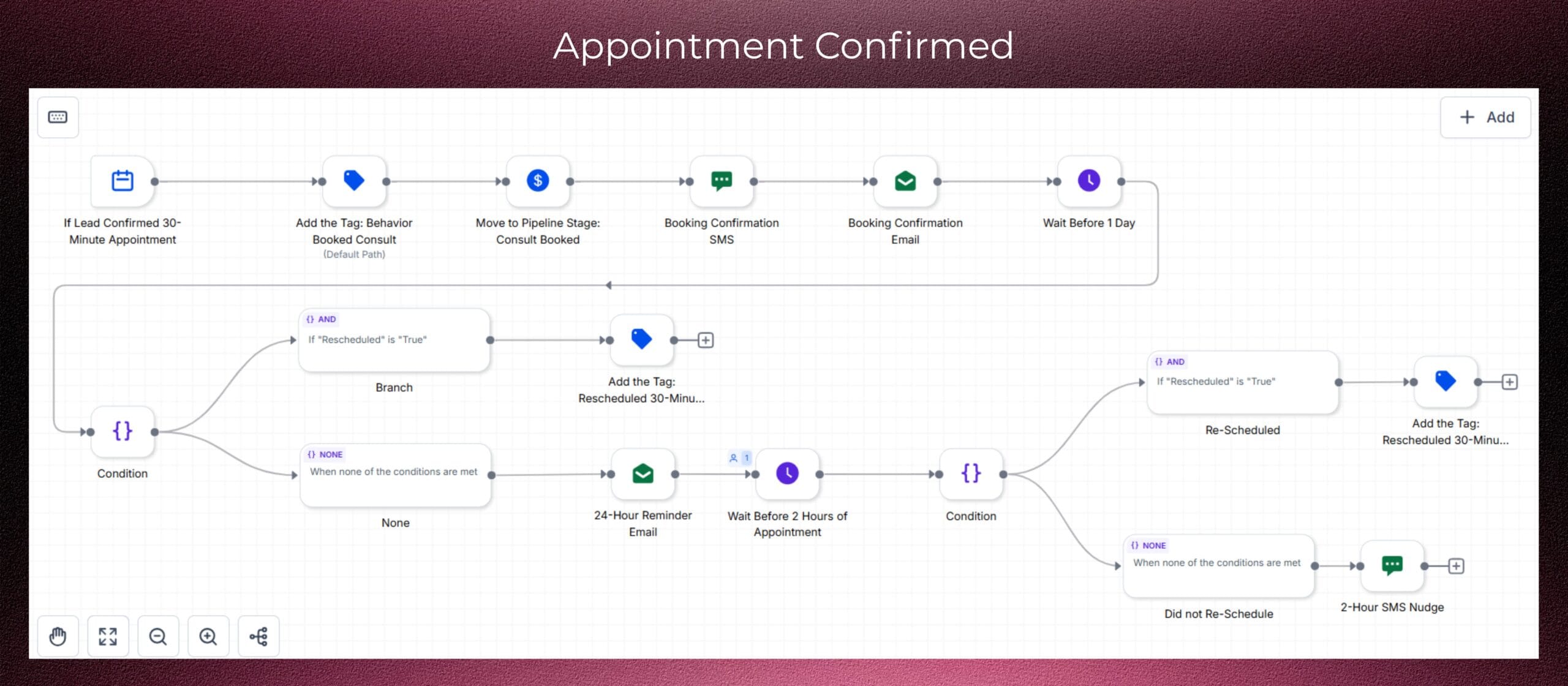
Once a patient confirms their appointment, the system takes over so the team doesn’t have to manually follow up.
Here’s what happens behind the scenes:
1. Appointment Confirmed
- As soon as the patient books or confirms their consultation, they’re automatically marked as having an upcoming appointment.
- This keeps the records organized and lets the team instantly see where each patient is in the booking process.
2. Instant Confirmation
- The patient immediately receives:
- A confirmation SMS
- A confirmation Email
- This reassures them that their booking has been successfully secured and provides all the appointment details.
3. Checking for Reschedules
- The system waits until the day before the appointment.
- If the patient has already rescheduled before this point, the automation recognizes that and adjusts accordingly.
- This prevents unnecessary reminder messages from being sent for an old appointment.
4. 24-Hour Reminder
- If the appointment hasn’t changed, the patient receives a friendly reminder 24 hours before their visit.
- This helps reduce forgotten appointments and improves attendance.
5. Final Check Before the Appointment
- Two hours before the scheduled appointment, the system checks one last time to see if the patient has rescheduled.
6. 2-Hour Reminder
- If the appointment is still active, the patient receives a short SMS reminder letting them know their appointment is coming up soon.
- This serves as a final nudge and helps minimize no-shows.
Consultation No-Show Recovery
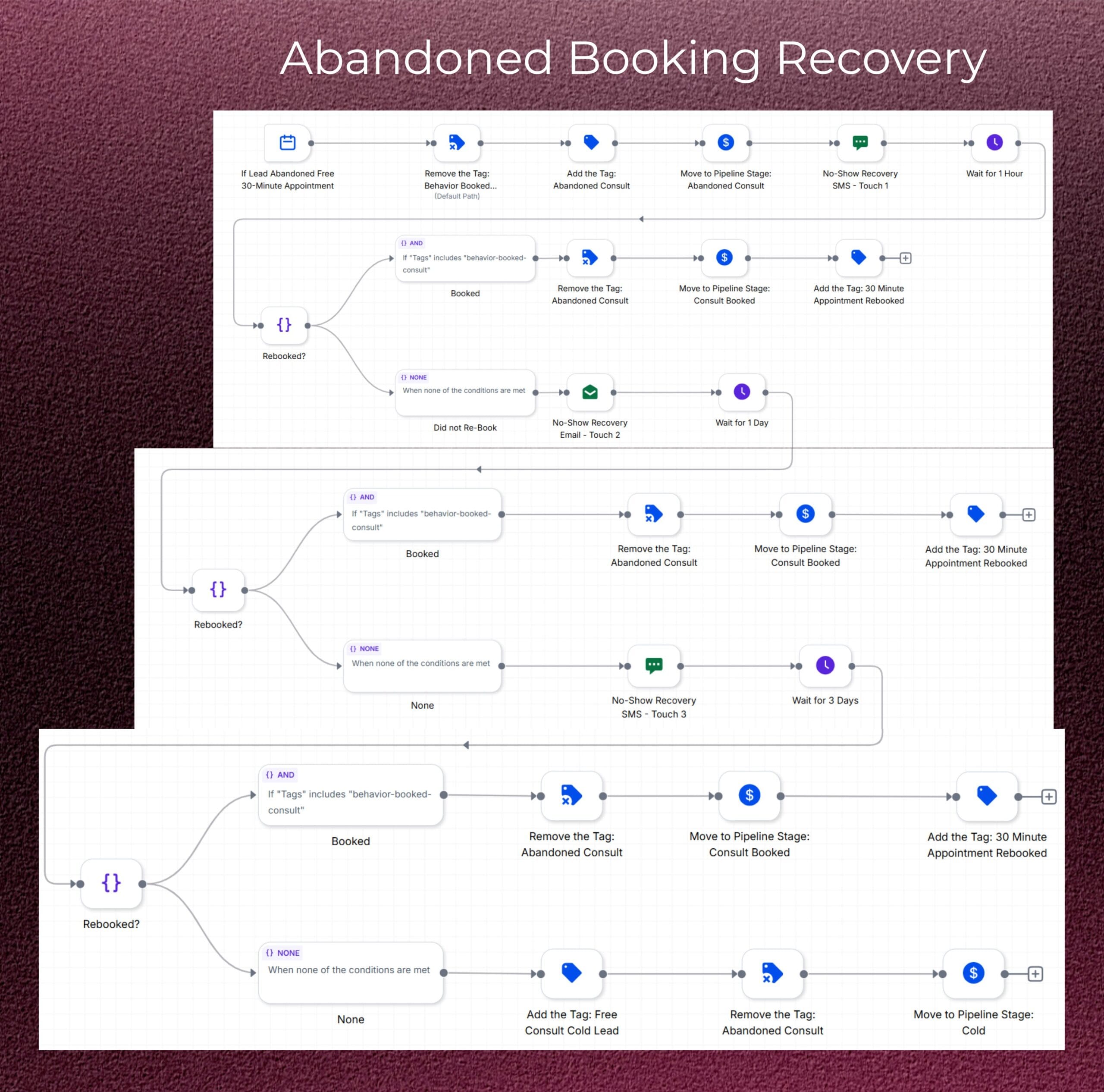
When a patient misses their appointment, the system automatically begins a gentle follow-up process to encourage them to book another consultation—without requiring staff to manually contact every patient.
Step 1: Patient Misses Their Appointment
If a patient doesn’t attend their scheduled consultation, the system automatically updates their status and starts a recovery sequence.
This helps ensure that no potential patient is forgotten.
Step 2: First Follow-Up (Immediately)
The patient receives a friendly SMS acknowledging that they missed their appointment and inviting them to reschedule if they’re still interested.
This gives them an easy opportunity to book again.
Step 3: Wait and Check
The system waits for about an hour to see whether the patient has already rebooked.
- If they have rebooked: the recovery messages stop immediately.
- Their record is updated to show they have a new appointment.
This prevents patients from receiving unnecessary reminders after they’ve already booked.
Step 4: Second Follow-Up (Next Day)
If the patient still hasn’t booked, they receive a follow-up email the next day.
Instead of simply reminding them, this email reinforces the benefits of the consultation and encourages them to secure another appointment.
Step 5: Check Again
After another waiting period, the system checks once more if they’ve rebooked.
- If yes, the recovery campaign ends.
- If not, it continues with another reminder.
Step 6: Third Follow-Up
The patient receives another SMS a few days later.
This serves as a final friendly reminder for patients who may have simply forgotten or become busy.
Step 7: Final Opportunity
After waiting a few more days, the system performs one final check.
- If the patient has booked, their status is updated and they exit the recovery campaign.
- If they still haven’t responded, they’re marked as a Cold Lead.
This allows the team to focus their attention on patients who are more likely to convert.
Treatment Upsell Automation
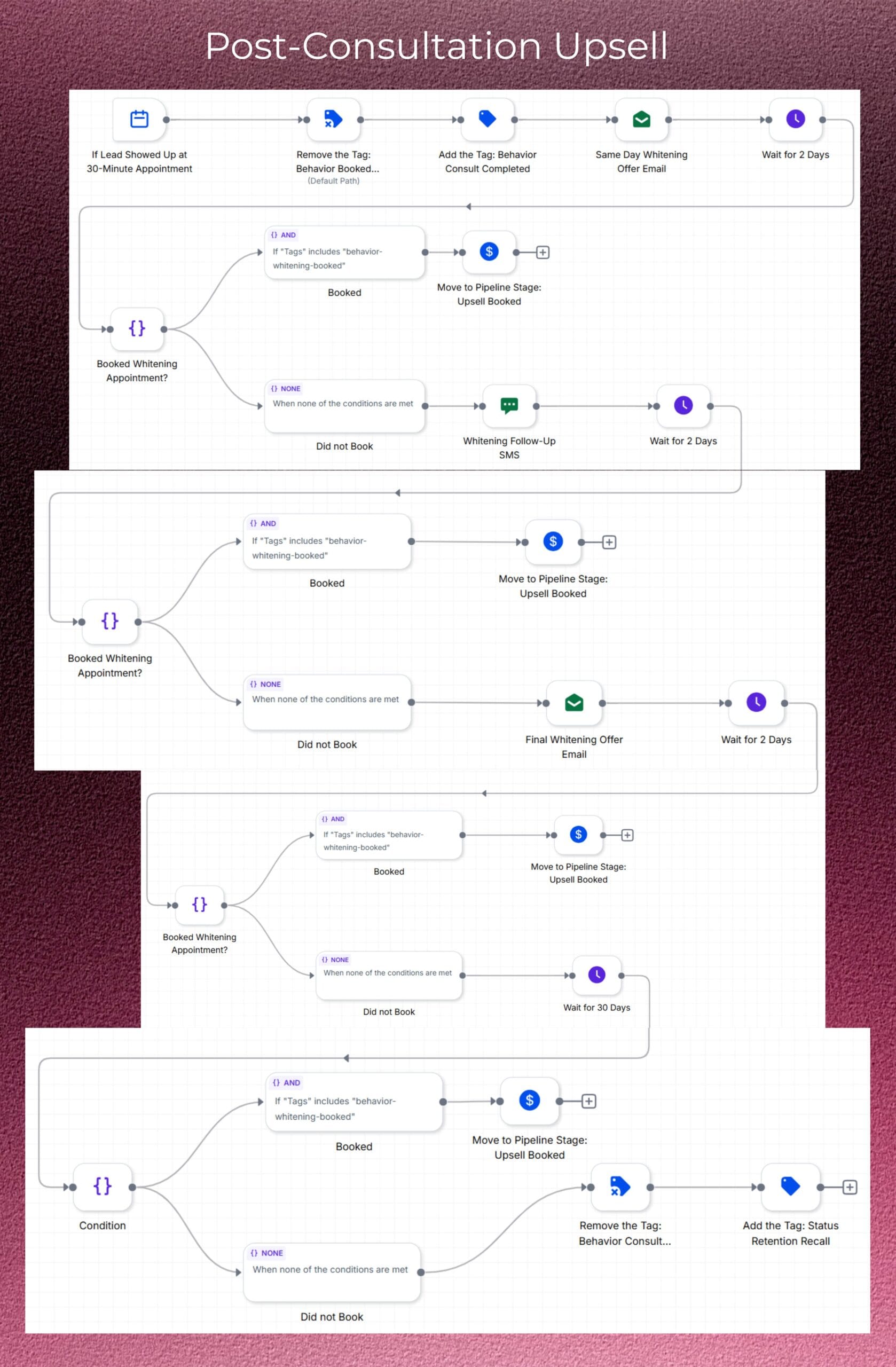
After a patient completes their consultation, the system automatically follows up with a relevant treatment offer while the consultation is still fresh in their mind.
The goal is to increase treatment acceptance without the staff having to manually contact every patient.
Step 1: Consultation Completed
Once the patient has attended their consultation, the system marks the consultation as completed.
This allows the practice to begin recommending the next appropriate treatment.
Step 2: Same-Day Treatment Offer
On the same day, the patient receives an email introducing the professional teeth whitening treatment.
Because the patient has just visited the clinic, this is the ideal time to present an additional service they’re more likely to consider.
Step 3: Give the Patient Time
The system waits a couple of days before checking whether the patient has booked the whitening treatment.
If they have booked:
Their record is updated, and they move into the treatment booking stage.
No additional promotional messages are sent.
If they haven’t booked:
The system continues with a gentle follow-up.
Step 4: Friendly SMS Reminder
A few days later, the patient receives a short text message reminding them about the whitening offer.
This keeps the treatment top of mind without feeling overly promotional.
Step 5: Another Opportunity
After waiting another couple of days, the system checks again.
- If the patient books, the follow-up ends.
- If not, they receive one final email.
Step 6: Final Offer Email
The patient receives one last email highlighting the benefits of professional whitening and encouraging them to take advantage of the opportunity.
This serves as the final invitation before ending the campaign.
Step 7: Long-Term Retention
If the patient still doesn’t book the whitening treatment, the system waits approximately 30 days.
During this waiting period, the system continuously checks whether the patient books an appointment. Once the 30 days have passed, the patient is automatically transitioned into the regular recall and retention program.
This keeps the patient engaged with the clinic and encourages future appointments and preventive care.
Treatment Appointment Management
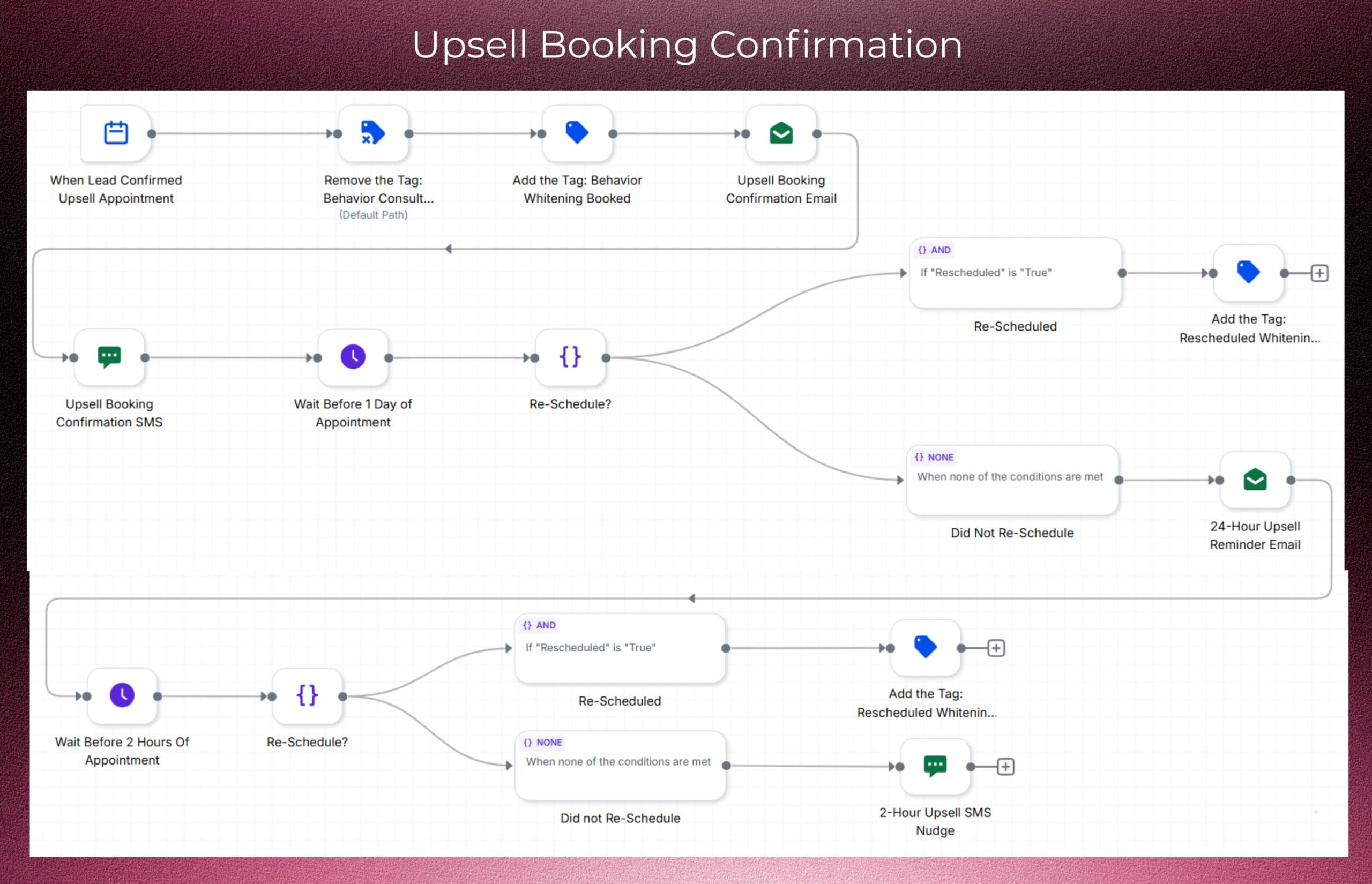
Once a patient books an additional treatment—such as professional teeth whitening—the system automatically manages all of the appointment communications for them.
This ensures patients stay informed, reduces missed appointments, and eliminates the need for the team to send manual reminders.
Step 1: Treatment Appointment Confirmed
As soon as the patient confirms their whitening appointment, the system updates their record to show that their treatment has been successfully booked.
This keeps everything organized and ensures they’re placed into the correct appointment journey.
Step 2: Instant Confirmation
Immediately after booking, the patient receives:
- A confirmation email with their appointment details.
- A confirmation SMS for quick and convenient access.
This gives patients confidence that their appointment has been secured and provides them with all the information they need.
Step 3: Check for Appointment Changes
One day before the appointment, the system checks whether the patient has rescheduled.
If they have rescheduled:
The system updates their appointment information and avoids sending reminders for the original appointment.
This keeps communication accurate and avoids confusion.
If they haven’t rescheduled:
The system proceeds with the scheduled reminder.
Step 4: 24-Hour Reminder
The patient receives a reminder email 24 hours before their whitening appointment.
This helps ensure they remember their visit and have time to prepare if needed.
Step 5: Final Appointment Check
Two hours before the appointment, the system performs one final check to see whether the appointment has been rescheduled.
If the appointment has changed, the system updates the patient’s status accordingly.
If not, it sends the final reminder.
Step 6: 2-Hour Reminder
The patient receives a brief SMS letting them know their appointment is coming up soon.
This final reminder helps reduce forgotten appointments and last-minute no-shows.
Treatment No-Show Recovery
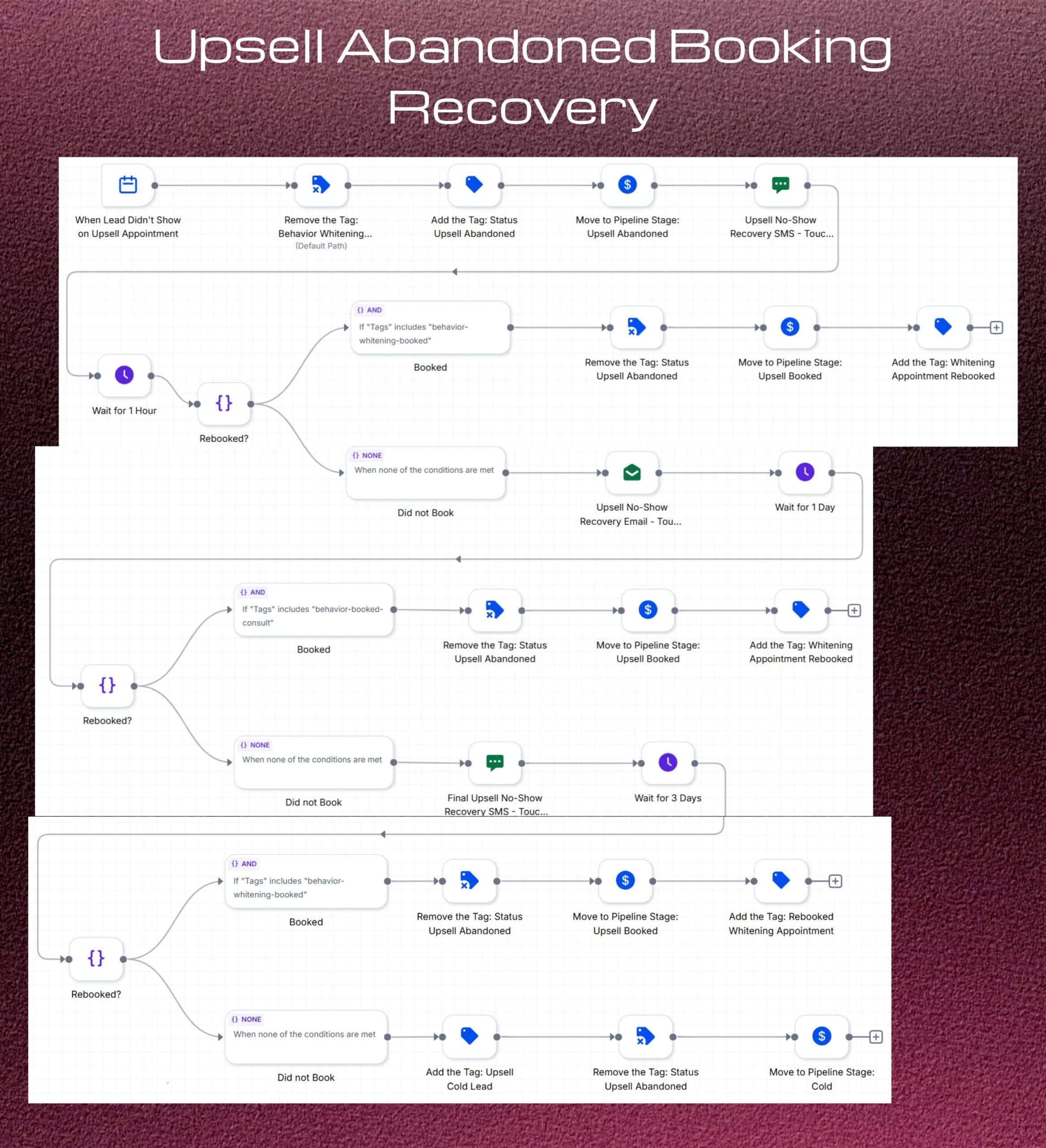
When a patient misses their scheduled treatment appointment, the system automatically follows up with them to help recover the booking.
Instead of relying on the staff to call every patient, the system sends timely reminders and invitations to reschedule, giving patients multiple opportunities to return.
Step 1: Patient Misses Their Treatment Appointment
If a patient doesn’t attend their whitening appointment, the system automatically updates their status and places them into a recovery sequence.
This ensures that every missed treatment is followed up consistently.
Step 2: First Follow-Up
The patient receives a friendly text message shortly after the missed appointment.
The message simply acknowledges that they missed their visit and provides an easy way to book a new appointment if they’re still interested.
Step 3: Check for a Rebooking
The system waits for a short period before checking whether the patient has already rebooked.
If they have rebooked:
- Their status is updated automatically.
- They move back into the normal treatment appointment journey.
- Any recovery reminders stop immediately.
This prevents unnecessary follow-up messages once they’ve taken action.
If they haven’t rebooked:
The system continues with another reminder.
Step 4: Second Follow-Up
The next day, the patient receives a follow-up email.
Rather than simply reminding them, the email reinforces the value of completing their treatment and encourages them to choose a new appointment time.
Step 5: Another Opportunity to Rebook
The system checks again after giving the patient some time to respond.
- If they’ve booked, the recovery campaign ends.
- If not, one final reminder is sent.
Step 6: Final Reminder
A few days later, the patient receives one last SMS inviting them to reschedule.
This is the final opportunity before ending the recovery campaign.
Step 7: Organize Inactive Patients
If the patient still doesn’t rebook after several reminders, they’re marked as an inactive or Cold Lead.
This doesn’t remove them from the database—it simply identifies them as someone who may be suitable for future promotions or re-engagement campaigns.
- Follows up with patients who miss scheduled treatment appointments.
- Encourages rescheduling through automated communication.
- Prevents revenue loss by recovering missed treatment opportunities.
Patient Activation
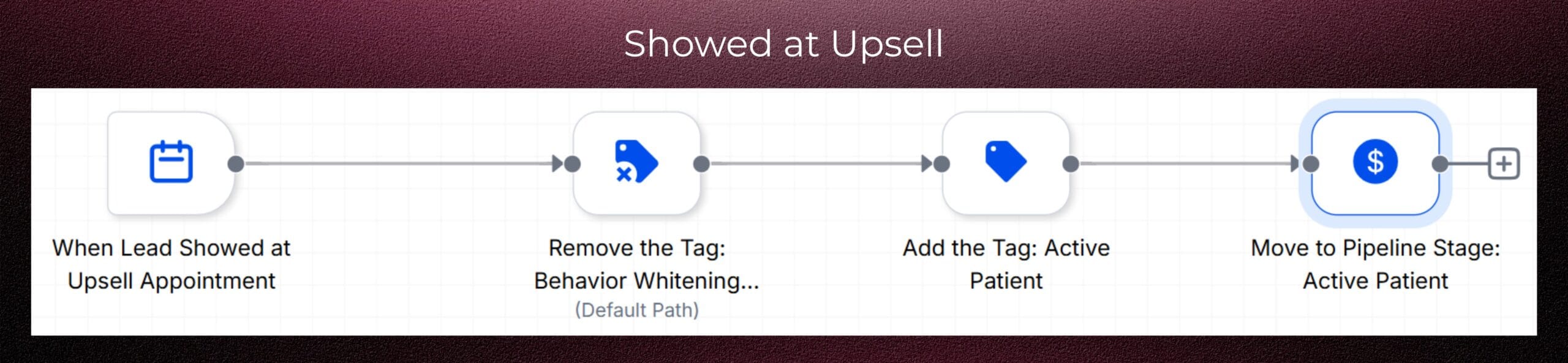
Once a patient attends and completes their scheduled treatment appointment, the system automatically updates their status.
This means the team no longer needs to manually track who has officially become an active patient.
Step 1: Treatment Completed
When the patient arrives and completes their whitening appointment, the system recognizes that the treatment has been successfully completed.
Step 2: Update the Patient Record
The system automatically removes any temporary appointment-related tracking and updates the patient’s profile.
This ensures the records remain clean and accurate.
Step 3: Mark as an Active Patient
The patient is officially classified as an Active Patient.
This indicates they’ve completed their treatment and are now part of the ongoing patient base.
Step 4: Move Into Active Patient Management
The patient is then moved into the Active Patient stage.
From here, they can automatically receive future communications such as:
- Routine recall reminders
- Maintenance check-ups
- New treatment recommendations
- Special promotions
- Patient appreciation campaigns
- Educational content
This keeps the relationship going long after the initial treatment.
Recall & Retention Automation
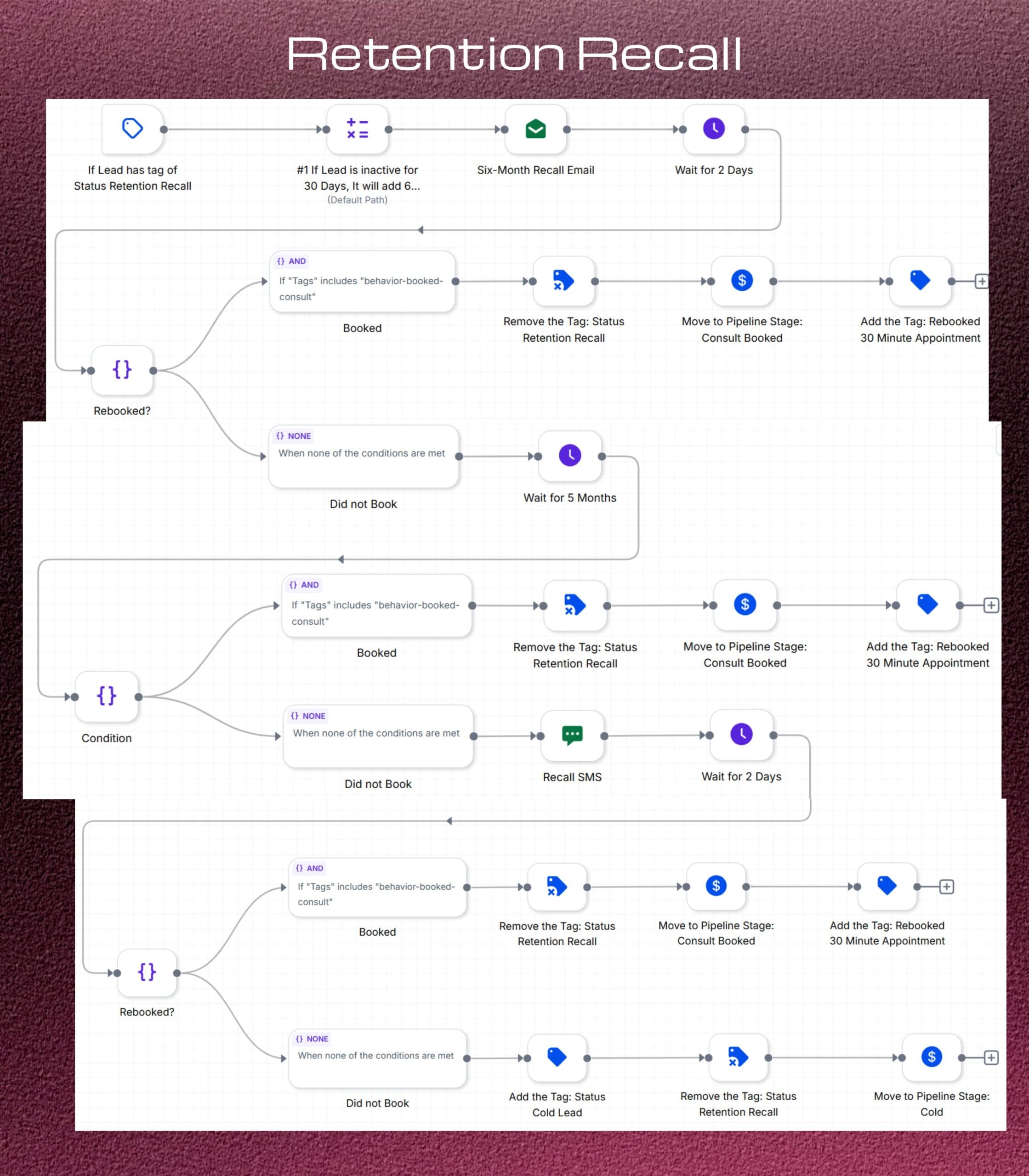
Many patients simply forget it’s time for their next visit. Instead of relying on the staff to manually keep track of every patient, this system automatically reminds them when they’re due for a recall appointment.
The goal is to keep the appointment schedule full while maintaining long-term relationships with the patients.
Step 1: Time for Their Recall
When a patient becomes due for their routine recall appointment, the system automatically reaches out with a personalized email.
Rather than sounding like a sales message, it simply reminds them that it’s been a while since their last visit and encourages them to book their next appointment.
Step 2: Give Them Time to Respond
The system waits a couple of days before checking whether the patient has already booked.
If they book:
The recall campaign ends immediately.
Their record is updated, and they’re moved back into the normal appointment journey.
No further recall reminders are sent.
If they haven’t booked:
The system simply waits until it’s appropriate to send another reminder.
Step 3: Gentle Follow-Up
Several months later, if the patient still hasn’t scheduled an appointment, they receive a friendly SMS reminder.
This serves as another opportunity to reconnect without being overly persistent.
Step 4: Final Check
After a few more days, the system checks one last time.
- If the patient books, they’re returned to the normal appointment process.
- If they still don’t respond, the recall campaign ends.
Step 5: Organize Future Marketing
Patients who don’t respond are simply marked as inactive.
This allows the practice to separate active patients from those who may need future re-engagement campaigns, seasonal promotions, or special offers.
Online Review Management
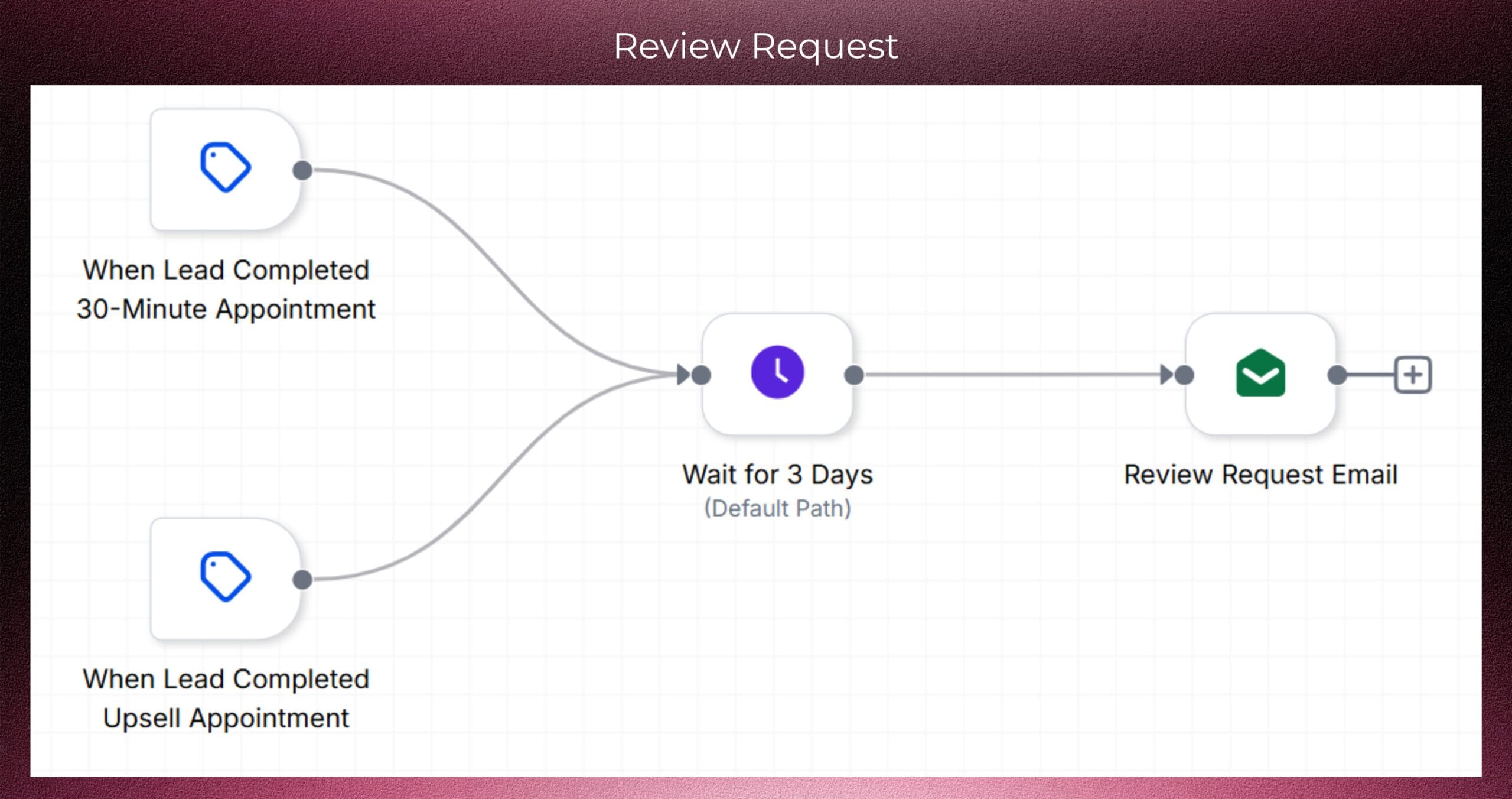
After a patient has completed their appointment, the system automatically follows up to ask about their experience and invite them to leave a review.
This helps the practice build a stronger online reputation without the team having to remember to ask every patient.
Step 1: Patient Completes Their Appointment
Once a patient’s visit has been successfully completed, the system begins the review request process.
Rather than asking immediately, it waits a few days so the patient has had time to reflect on their experience.
Step 2: First Review Request
Three days after the appointment, the patient receives a friendly Email thanking them for choosing the practice and inviting them to leave a review.
The message includes a direct link, making it quick and easy for them to share their feedback.
Cold Lead Reactivation Journey
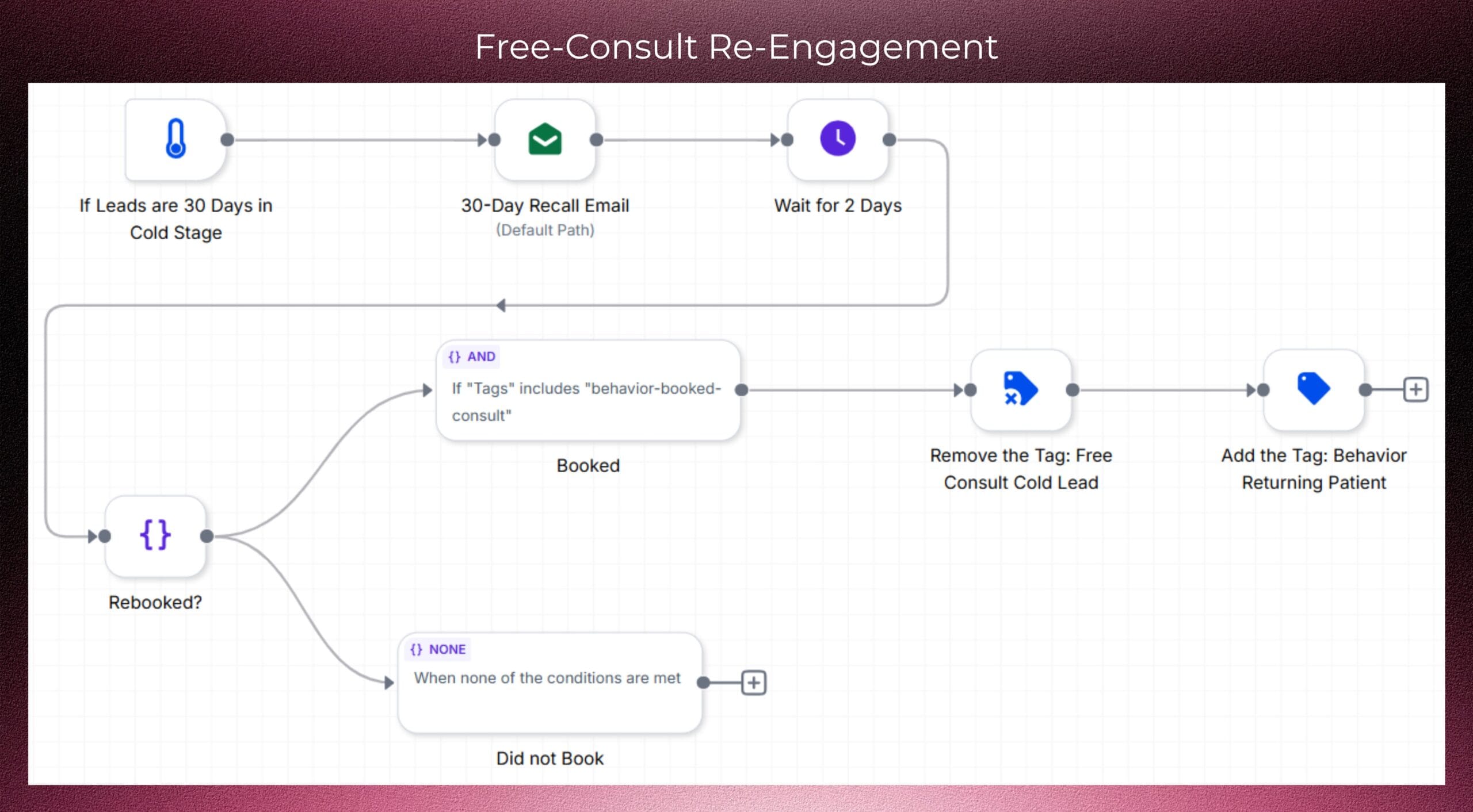
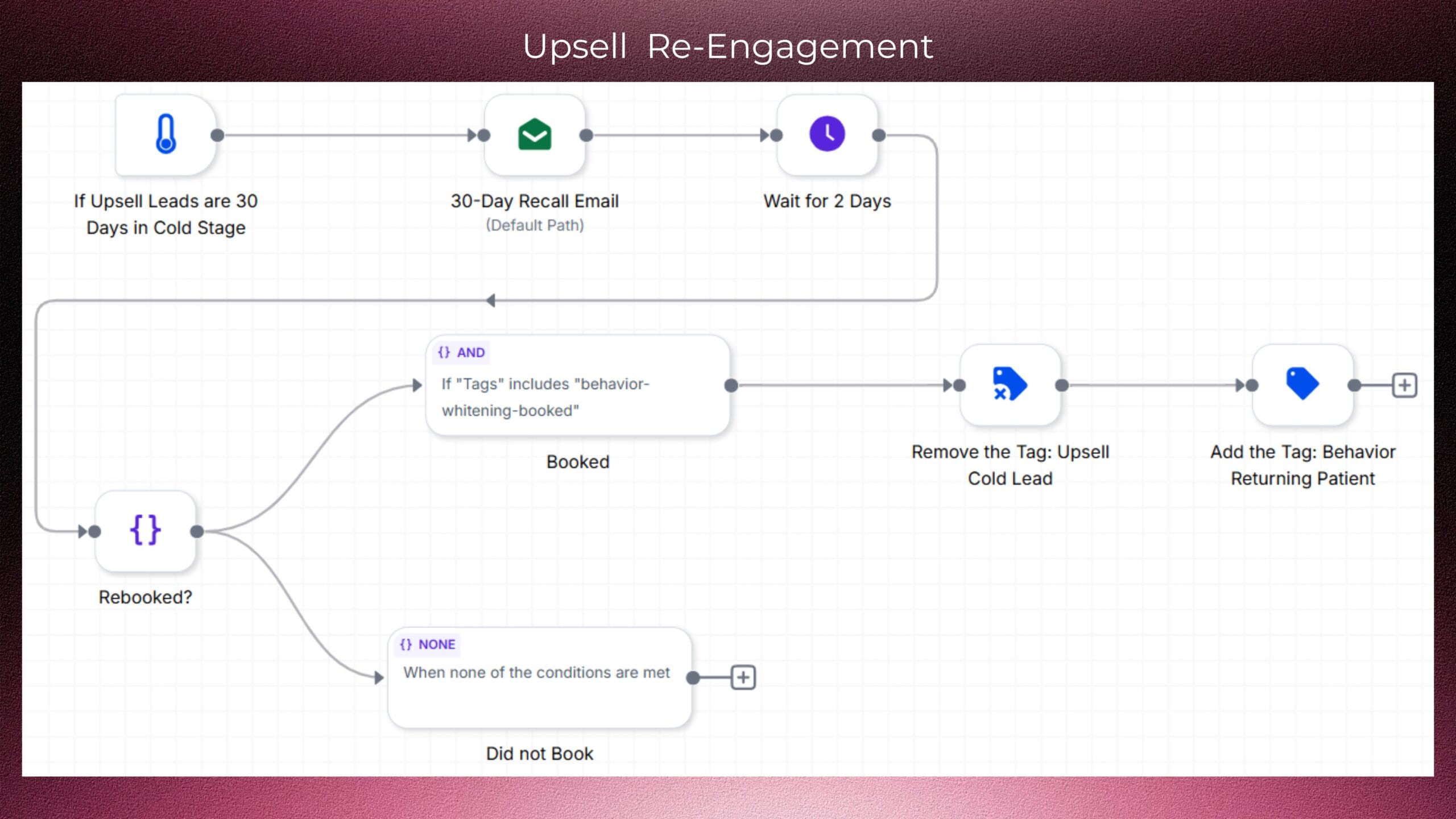
Not every patient books the first time they inquire. Some become busy, postpone treatment, or simply forget to follow up. Instead of letting those opportunities go to waste, this automation automatically reaches back out after a period of inactivity.
The goal is to reconnect with potential patients and encourage them to schedule an appointment—without requiring the team to manually follow up.
Step 1: Identify Inactive Patients
When someone has been inactive for 30 days without booking an appointment, the system automatically recognizes them as a cold lead.
Rather than removing them from the database, they’re enrolled in a reactivation campaign.
Step 2: Send a Friendly Check-In
The patient receives a personalized email reminding them that the team is still available to help.
The message may include:
- A reminder about their previous inquiry.
- The benefits of scheduling a consultation.
- A simple way to book an appointment.
This serves as a gentle invitation rather than a sales pitch.
Step 3: Give Them Time to Decide
After sending the email, the system waits a couple of days before checking whether the patient has booked.
This gives them time to read the message and take action.
Step 4: Check if They Rebooked
If they booked:
The system immediately updates their status.
They are no longer considered a cold lead and are recognized as a Returning Patient.
From there, they move back into the normal appointment journey, where they’ll receive confirmations and reminders just like any other patient.
If they didn’t book:
Nothing else is sent.
The patient simply remains in the inactive list, allowing the team to decide whether to include them in future promotions or seasonal campaigns.
CRM & Pipeline Management
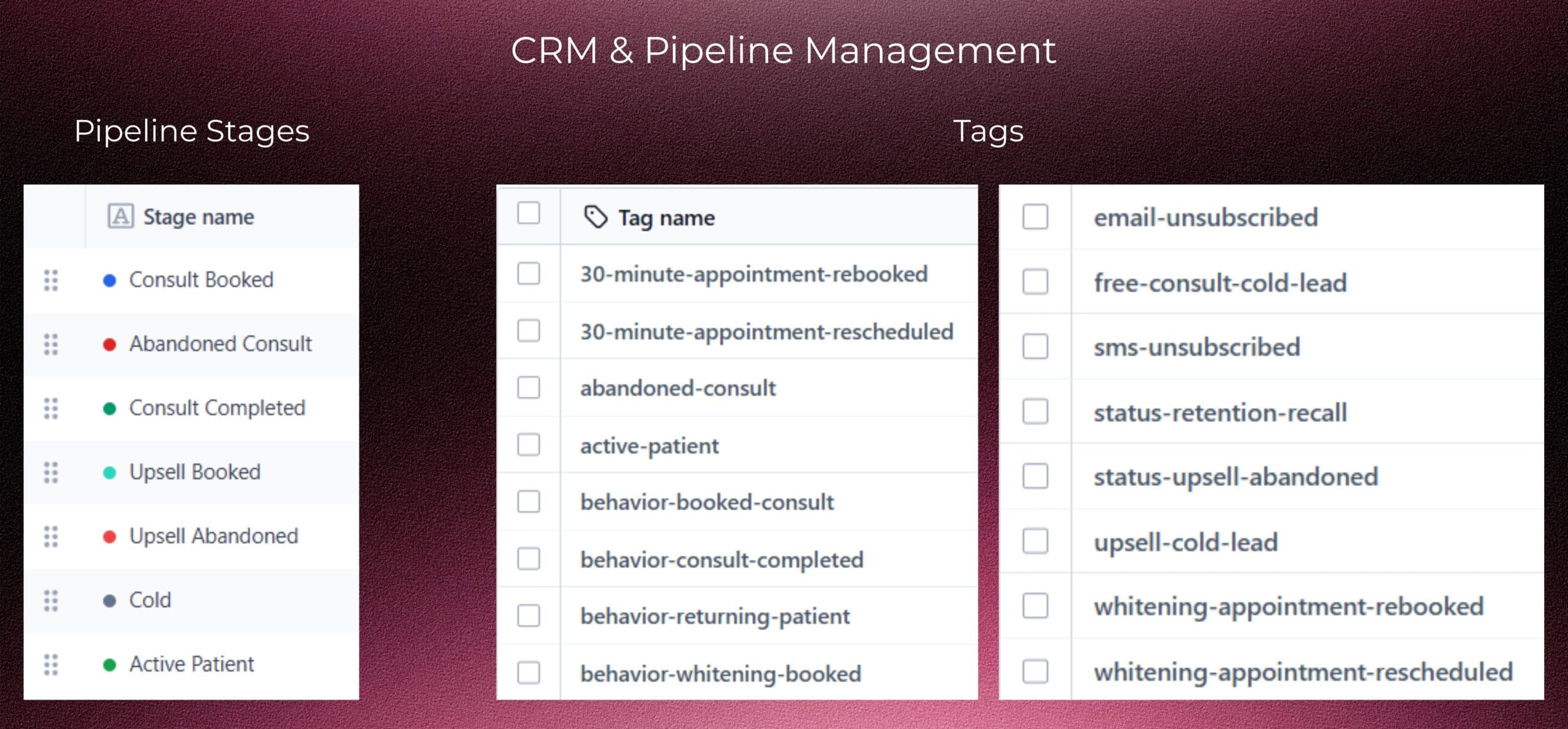
- Automatically updates patient stages throughout every phase of the patient journey.
- Uses behavioral tags and pipeline stages to maintain organized patient records.
- Eliminates manual record management for clinic staff.
Results
The Haneul Dental Care Automation System was designed as a conceptual marketing automation project to demonstrate how an integrated patient communication system can streamline clinic operations while enhancing the overall patient experience.
By integrating appointment management, follow-up campaigns, patient retention strategies, and online reputation management into a single automated ecosystem, the system enables the clinic to:
- Recover missed appointments with follow-up sequences.
- Increase treatment bookings through personalized upsell campaigns.
- Maintain long-term patient relationships through automated recall programs.
- Generate more positive online reviews to strengthen the clinic’s digital reputation.
- Reduce repetitive administrative work for front desk staff.
- Deliver a consistent, communication experience throughout the entire patient journey.
- reconnect with potential patients and encourage them to schedule an appointment – Re-Engagement Campaign.
Key Outcomes
- End-to-end automation of the complete patient lifecycle.
- Multi-channel communication through SMS and email.
- Automated consultation and treatment reminders.
- No-show recovery workflows.
- Personalized treatment upsell campaigns.
- Long-term patient recall and retention system.
- Automated Google review request process.
- Centralized CRM pipeline management.
- Reduced manual administrative workload.
- Improved patient engagement and practice efficiency.
- Reconnect potential patients to get an appointment.
Skills Demonstrated
- Marketing Automation Design
- GoHighLevel Workflow Development
- CRM Pipeline Management
- Customer Journey Mapping
- Email Marketing Automation
- SMS Marketing Automation
- Lead Nurturing & Patient Retention
- Appointment Automation
- Reputation Management Automation
- Business Process Automation
- Workflow Optimization
- Customer Experience (CX) Design