
Quick Links
Categories
- Internet of ThingsTech Projects
Tags
- Arduino ProgrammingBlynkESP8266Fire Alarm SystemHardware ProjectInternet of ThingsIoTNodeMCUSensors
Project Title: IoT-Based Fire Alarm System
Project Type: Academic Project – Internet of Things
Role: Project Manager • Developer
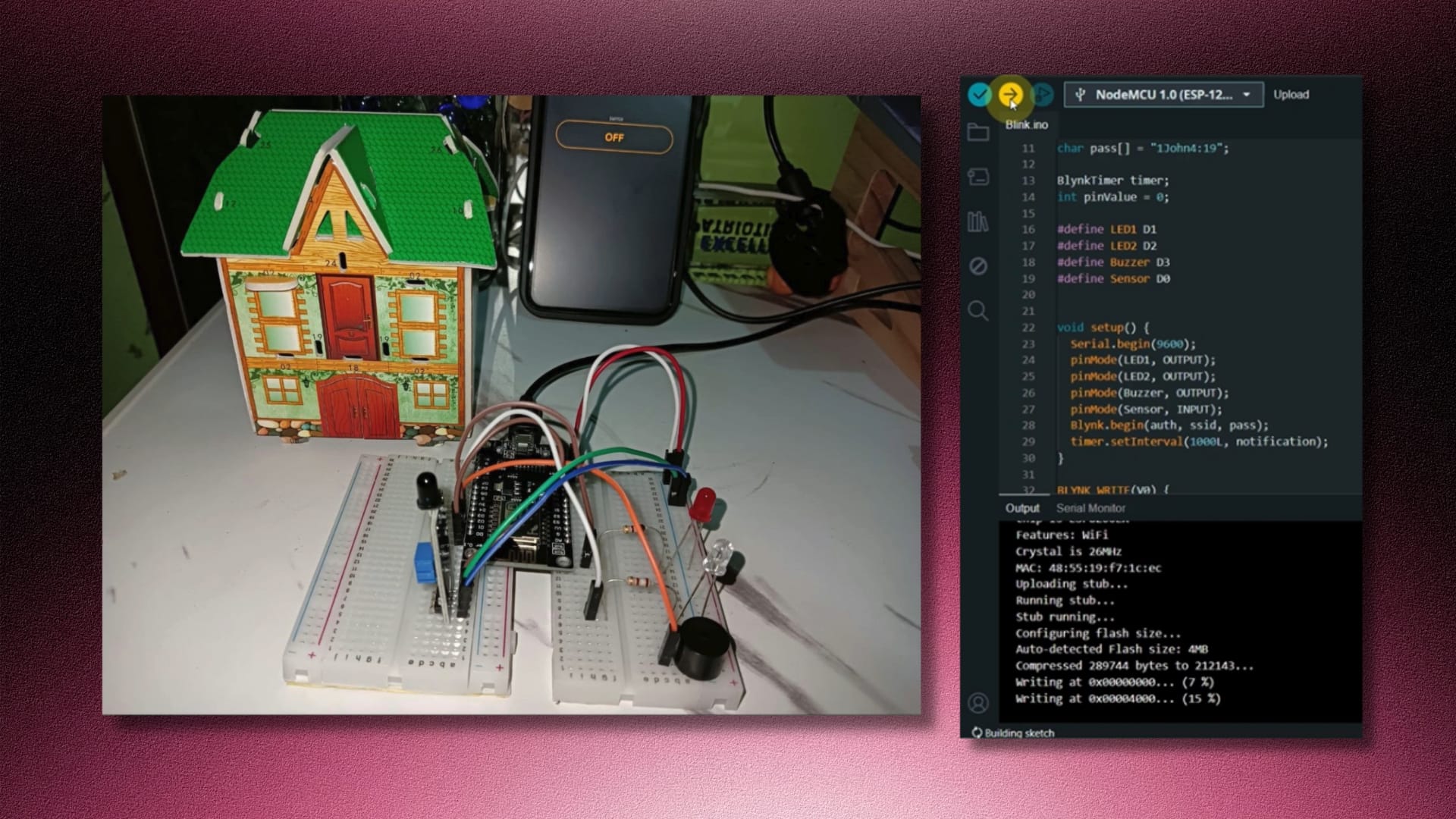
Tools Used: NodeMCU ESP8266 microcontroller, Flame sensor, LED, Buzzer, 180-ohm Resistors, Breadboard, Jumper Wires, WIFI Library, Blynk Library
Objectives
- To develop a reliable fire detection system using NodeMCU ESP8266;
- To integrate the fire alarm system with the Blynk platform for remote monitoring and control;
- To provide real-time notifications to users via the Blynk app in case of fire detection; and
- To ensure ease of installation and configuration for end-users.
Features
- IoT Technology – The system utilizes Internet of Things technology, allowing for remote monitoring and control of the fire alarm system.
- Flame Sensor – Incorporates a flame sensor module to detect the presence of fire or abnormal heat levels.
- Push Notification – Sends push notifications to the user’s smartphone via the Blynk app in case of a fire event, ensuring immediate awareness and response.
- Blynk Integration – Integrates with the Blynk platform, enabling remote access to the fire alarm system from anywhere with an internet connection.
- Suitable for Various Settings – Designed for use in homes, offices, and factories.
Functions
- Fire Detection – Monitors the environment for signs of fire using the flame sensor module, triggering an alarm when detected.
- Push Notification Alert – Sends real-time push notifications to the user’s smartphone through the Blynk app upon detecting a fire, to ensure prompt action can be taken.
- Remote Monitoring and Control – Allows users to remotely monitor the status of the fire alarm system and control its functions through the Blynk app.
- Safety Assurance – Enhances safety measures by providing timely alerts in the event of a fire, helping to minimize potential damages and ensure the safety of occupants in the connected location.
- Easy Installation and Operation – Offers a user-friendly interface and straightforward setup process, making it accessible to users with varying levels of technical expertise.
Required Components
- NodeMCU board (ESP8266)
- Flame sensor
- LED
- 180-ohm resistors
- Buzzer
- Breadboard
- Jumper wires
- WIFI library
- Blynk library
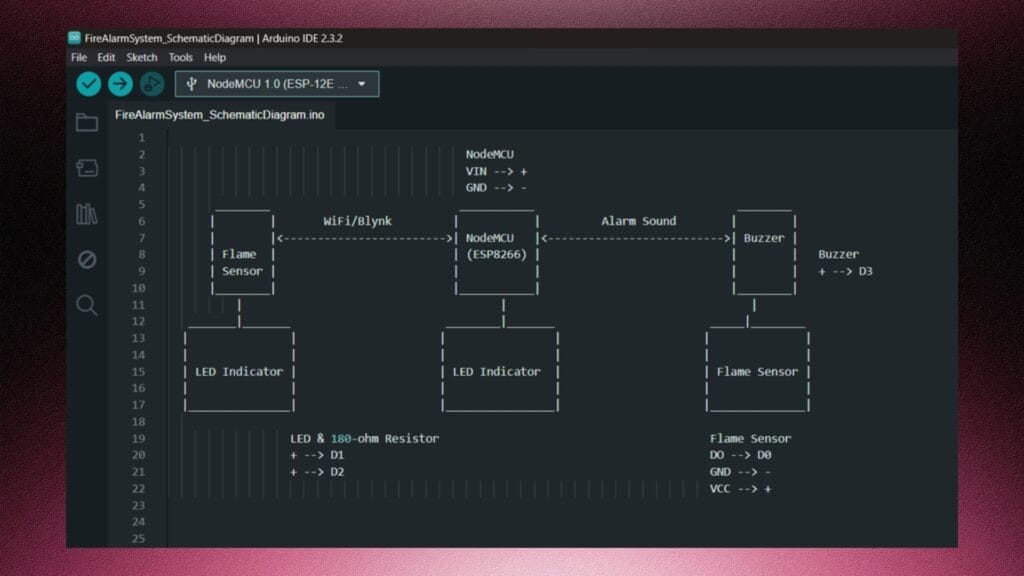
Schematic Diagram
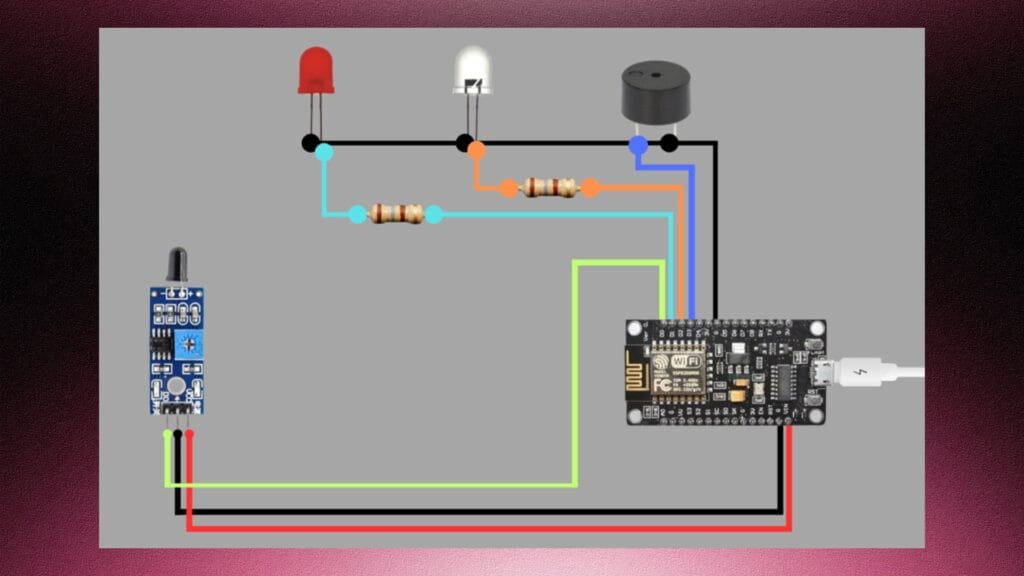
Circuit Diagram
Video Demonstration
User Guide
- Introduction:
The IoT Based Fire Alarm System is a smart monitoring solution designed to detect fire incidents and provide timely alerts to users via the Blynk mobile application. This guide outlines the operation and functionality of the system.
- System Components:
- NodeMCU ESP8266 microcontroller
- Flame sensor module
- White LED (LED1)
- Red LED (LED2)
- Buzzer
- Blynk mobile application
- System Operation:
Power On: Upon powering on, the NodeMCU board initializes and connects to the Blynk cloud server through the internet.System Activation: Users can toggle the system ON or OFF using the Blynk app.
Monitoring Mode: When the system is activated, it continuously monitors the environment using the flame sensor module for signs of fire or abnormal heat levels.
Fire Detection: If a fire event is detected, the system triggers an alarm by activating the red LED and sounding the buzzer simultaneously.
Push Notification: A push notification is sent to the user’s smartphone via the Blynk app, alerting them to the fire incident.
User Response: Upon receiving the push notification, users can take appropriate action, such as contacting emergency services or evacuating the premises.
Return to Normal Operation: After the fire alarm is triggered and the notification is sent, the system returns to its normal state.
Status Indication: The white LED bulb is activated to indicate that the system is no longer in an alarm state and is ready for monitoring again.
Continuous Monitoring: The system remains operational, continuously monitoring for fire events and providing alerts when necessary.
- Using the Blynk App:
- Users can control the system’s ON/OFF status and monitor its operation through the intuitive interface of the Blynk mobile application.
- The Blynk app allows users to receive push notifications, view logs, and monitor the status of the fire alarm system in real-time.
- Safety Precautions:
- Ensure proper installation and placement of the fire alarm system components according to safety standards.
- Regularly test the functionality of the system to ensure it operates effectively in case of emergencies.
- In the event of a fire alarm activation, follow established safety protocols and evacuation procedures.
The Fire Alarm System provides an essential layer of safety and security by detecting fire incidents and promptly alerting users for timely response and action. By leveraging the Blynk platform, users can monitor their premises remotely and ensure the safety of their property and occupants.